


A business can have loyal customers, years of operating experience, and a respected name in its community and still not be ready to approach a lender.
Capital readiness requires more than having a successful product or service. A business owner must also be able to explain how the company earns money, where that money goes, why financing is needed, how the funds will improve the business, and what cash flow will support repayment.
That was the challenge facing Tortilla Flatz Mexican Grill, a woman- and minority-owned restaurant in Plainfield, Illinois. Through AEMC’s Small Business Growth Initiative, owner Cristina Zamarron received individualized financial advisory, loan-package preparation, and lender-readiness assistance. After completing this work, Tortilla Flatz successfully obtained business funding through Allies for Community Business.
The company’s journey illustrates an important lesson for small-business owners: operating a strong business and presenting a lender-ready business are related, but they are not the same thing.
At a glance
BUSINESS
Tortilla Flatz Mexican Grill
LOCATION
Plainfield, Illinois
OWNER
Cristina Zamarron
IN BUSINESS
More than six years
KNOWN FOR
Dine-in, carryout, catering, taco bars and specialty events
SBGI SUPPORT
Financial advisory, loan-package preparation and lender-readiness assistance
OUTCOME
Business funding through Allies for Community Business
PART 1
A Real Business With a Real Operating History
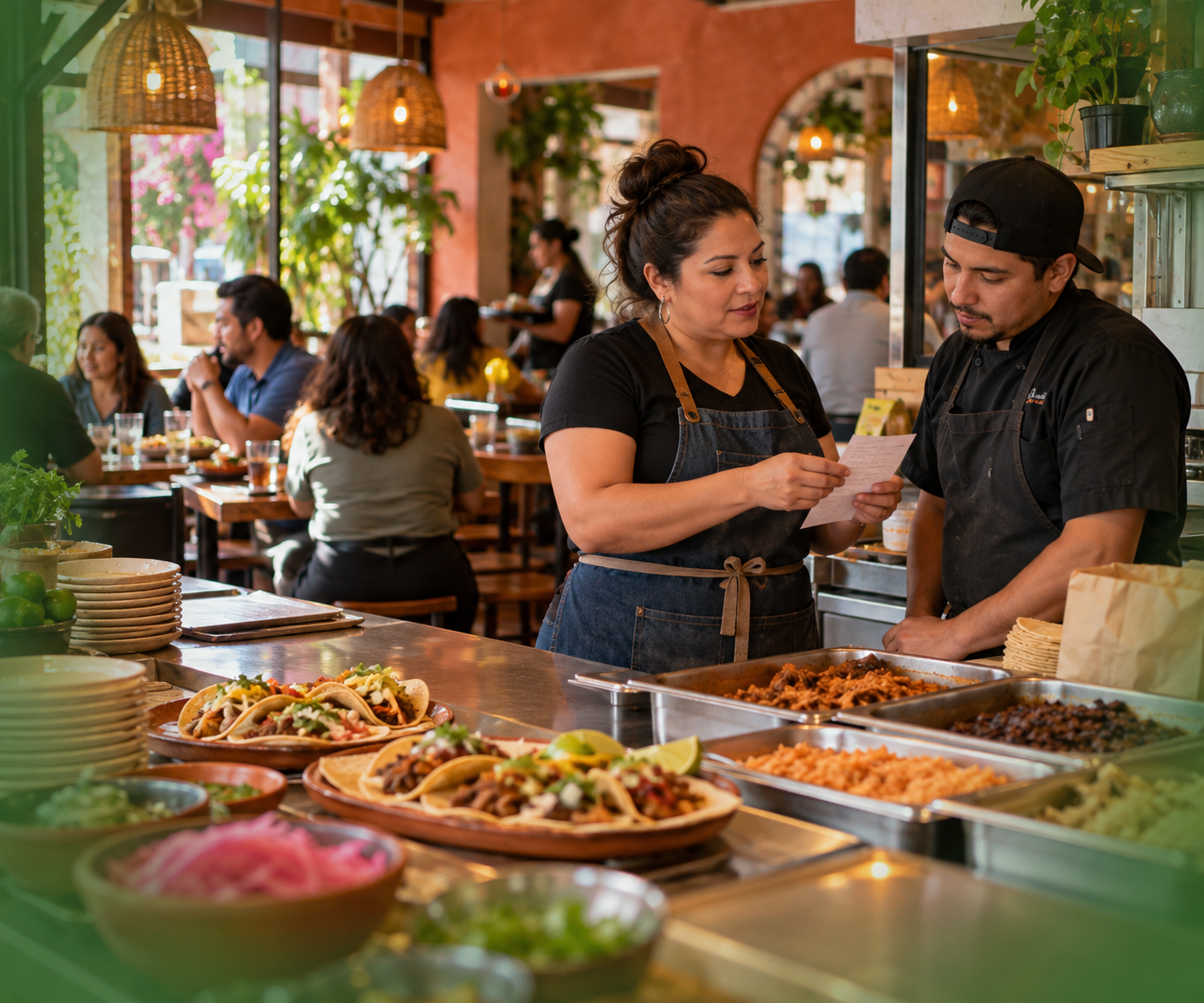
Cristina built Tortilla Flatz into a recognized restaurant serving customers through dine-in and carryout service, catering, taco bars, and specialty events.
For more than six years, the business developed a loyal customer base and earned local recognition for its food, margaritas, and catering. Its customers have included families, schools, businesses, and community organizations.
Tortilla Flatz was not simply an idea or a new company trying to prove that customers existed. It was an established business with a history of serving its community.
However, even experienced business owners can encounter circumstances that affect cash flow, financial organization, and access to capital. Pandemic-era disruption, staffing pressure, rising operating costs, and unexpected internal setbacks created additional challenges for the restaurant.
Cristina understood the daily realities of running her business. The next step was turning that knowledge into a financial story that a lender could clearly understand and evaluate.
THE JOURNEY
From a strong business to a lender-ready one
Six years of serving Plainfield
A loyal customer base and local recognition for its food, margaritas and catering.
Real-world setbacks
Pandemic-era disruption, staffing pressure, rising operating costs and unexpected internal setbacks.
Getting lender ready with SBGI
Organizing financial information, reviewing cash flow, defining the use of funds and preparing a clearer lender presentation.
Funded
Business funding through Allies for Community Business.
PART 2
Operating Experience Does Not Automatically Create Lender Readiness
Small-business owners often know their businesses better than anyone else. They know which products customers prefer, when sales are strongest, which expenses are increasing, and what the business needs to move forward.
But lenders cannot approve financing based only on the owner’s knowledge, effort, or confidence in the business. They must evaluate financial records, cash flow, existing obligations, the proposed use of funds, and the company’s ability to repay the financing.
WHAT THE OWNER KNOWS
• Which products customers prefer
• When sales are strongest
• Which expenses are increasing
• What the business needs to move forward
WHAT A LENDER MUST SEE
• Financial records
• Cash flow
• Existing obligations
• The proposed use of funds
• The ability to repay the financing
A business owner may therefore operate successfully while still needing assistance with:
This is the gap between being in business and being capital ready.
PART 3
Your Financial Records Must Support Your Story
When an owner speaks with a lender, every part of the application should tell a consistent story.
That story should be supported by the company’s:
= one consistent story
RED FLAG 1
If the owner says the business is profitable but the financial statements consistently show losses, the lender will need an explanation.
RED FLAG 2
If reported revenue does not appear in the business bank account, the lender may question whether the income can be verified.
RED FLAG 3
If the requested loan amount does not match the proposed use of funds, the lender may not understand how the financing will help the business.
Capital readiness requires the financial documents and the business narrative to support each other.
TORTILLA FLATZ
For Tortilla Flatz, SBGI’s assistance included reconstructing and organizing available financial information, reviewing cash flow and existing obligations, defining the intended use of financing, and preparing a clearer lender presentation.
PART 4
Business Owners Must Explain Why They Need Funding
“Working capital” is a legitimate financing purpose, but the phrase alone does not tell a lender enough.
An owner should be prepared to explain exactly what the financing will support. Depending on the business, that could include:
The owner should also explain how the financing will improve or stabilize the business.
Will it allow the company to serve more customers?
Complete a contract?
Reduce an operational bottleneck?
Maintain adequate inventory?
Reopen a service area?
Build a cash reserve?
Expand a profitable part of the business?
TORTILLA FLATZ
For Tortilla Flatz, the capital-readiness process helped establish a more defined plan for how financing would support continued stabilization, restaurant operations, and future growth.
PART 5
Financial Challenges Should Be Explained Honestly
Many owners fear that acknowledging a difficult period will automatically disqualify them from financing. That is not always the case.
A lender may be willing to consider a business that has experienced setbacks when the owner can clearly explain:
What happened
When it happened
How it affected the business
What has already been corrected
What operational changes have been made
How the business will reduce the likelihood of the problem recurring
“
Avoiding the issue can create more concern than addressing it directly.
A strong lender narrative does not hide challenges. It places them in context, documents the company’s response, and explains why the business is now better positioned to move forward.
PART 6
Strengthen the Business Before Submitting the Application
Capital readiness is not limited to preparing paperwork. Sometimes the advisory process identifies changes the business should make before or while pursuing financing.
WHAT TORTILLA FLATZ WORKED ON
During its engagement with SBGI, Tortilla Flatz worked on practical operational improvements, including stronger cash tracking, tighter cost control, leaner inventory practices, and a more focused operating model.
These changes helped strengthen the business itself—not just its loan application.
This is an important distinction. Financing should support a workable business strategy. It should not be expected to solve every operational problem without corresponding changes inside the company.
PART 7
The Right Lender Connection Matters
Not every lender is the right fit for every business.
Traditional banks, credit unions, community development financial institutions, nonprofit lenders, and other mission-focused lenders may evaluate businesses differently and offer different products.
SBGI connected Tortilla Flatz with Allies
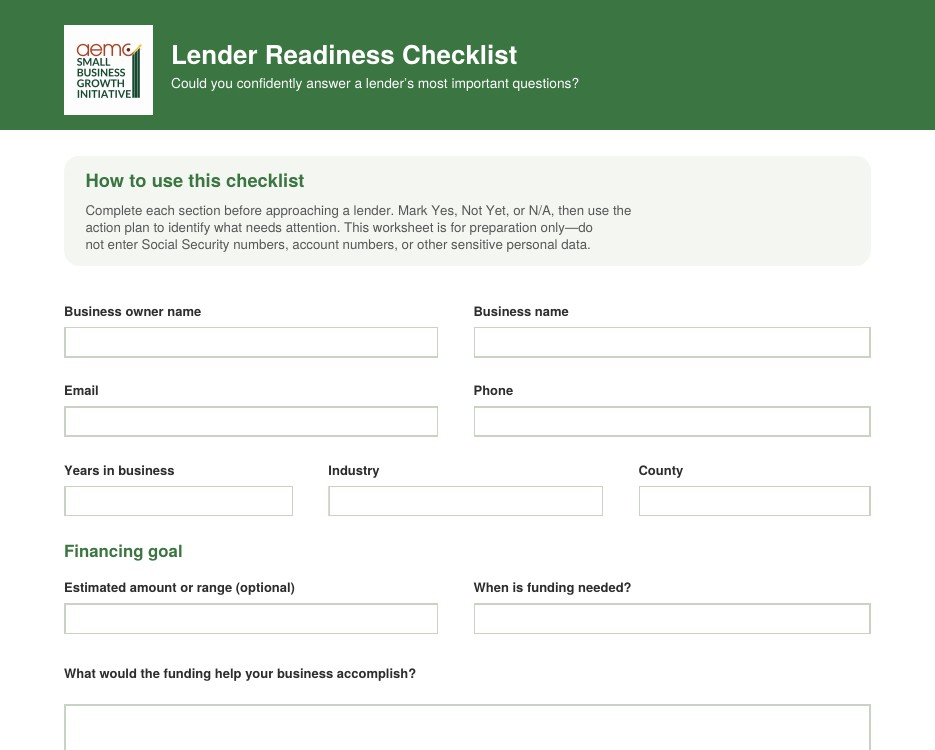
FREE DOWNLOAD
Lender Readiness Checklist
Could you confidently answer a lender’s most important questions?
Ready for support?
The Small Business Growth Initiative provides free technical assistance to help eligible Illinois small businesses prepare for financing, strengthen their financial information, and connect with lending resources.