


Revenue Is Not the Same Thing as Economic Benefit
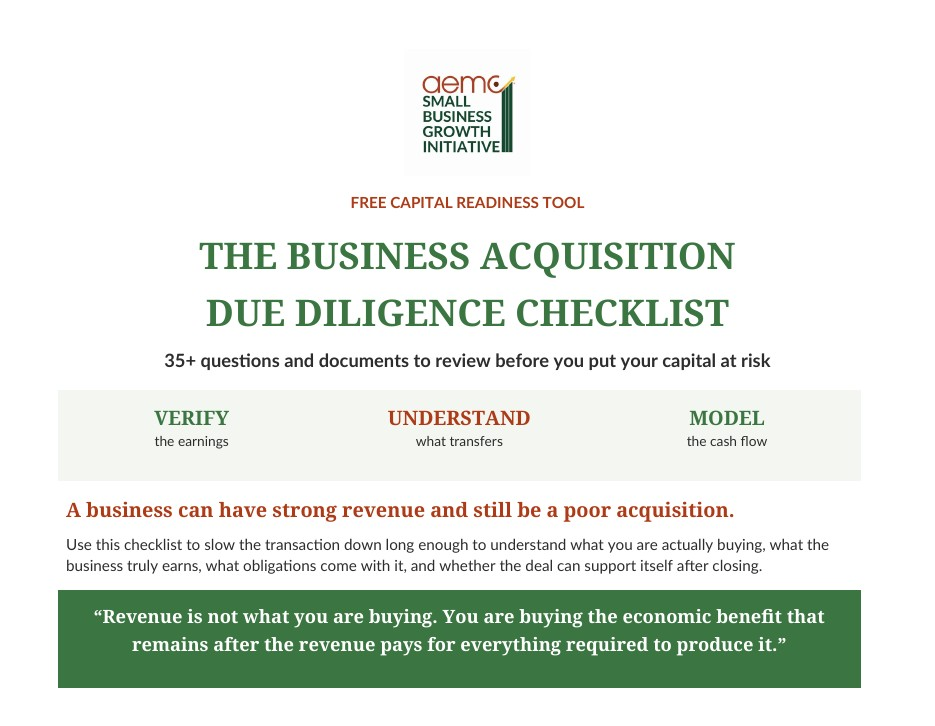
Revenue is not what you’re buying. You’re buying the economic benefit that remains after the revenue pays for everything required to produce it.

Start With the Tax Returns But Don’t Stop There
- Business tax returns and financial statements
- Balance sheets
- Depreciation schedules and fixed assets
- Bank statements and merchant-processing activity
- Payroll and contractor expenses
- Debt and shareholder loans
- Customer contracts and future bookings
- Lease obligations
- Unusual or nonrecurring transactions

Normalize the Earnings Before You Believe the Profit Number

When the Best Year Changes the Story, Verify It More, Not Less
Source documents help you determine whether the underlying economic activity supports the story.

Follow the Cash, Not Just the Profit

A Seller’s Investment Is Not the Same as the Buyer’s Value
SBGI TIP: Historical investment explains what the seller spent. It does not, by itself, establish what the buyer should pay.

If You’re Buying a Leased Business, You’re Also Buying Into the Lease Economics
A great location under a bad lease can still produce a bad acquisition.

Goodwill Has to Survive the Seller

Don’t Pay the Seller for Growth You Will Have to Create
- An established customer base
- A professional network
- Industry relationships
- Marketing capabilities
- Complementary businesses
- New service ideas
- Better operating systems
- Plans to expand utilization or introduce new revenue streams
Don’t pay today’s seller for tomorrow’s value that you will have to create yourself.

Future Contracts Aren’t Automatically Worth Their Face Value

Acquisition Debt Can Turn a Profitable Business Into a Cash-Flow Problem
- Acquisition loan payments
- Seller-financing payments
- Equipment or vehicle payments
- Monthly rent
- Payroll
- Insurance
- Inventory purchases
- Working-capital expenditures
Will the acquisition support itself or will the existing company have to support the acquisition?

FREE RESOURCE
Business Acquisition Due Diligence Checklist
Get a step-by-step checklist to help you evaluate a potential acquisition before you commit.
Capital Readiness Is About More Than Getting the Loan
At SBGI, we provide financial advisory and capital-readiness technical assistance to help entrepreneurs make informed growth decisions — whether that means purchasing a business, expanding an existing one, or pursuing other opportunities.
Personalized Advisory Support
Practical Tools and Resources
Stronger Business Outcomes
This article is for educational purposes and does not constitute a certified business valuation, appraisal, legal opinion, investment advice or lending commitment. The appropriate scope of financial, tax and legal due diligence depends on the specific transaction.